Stubai Valley / NEW: now open
 Open since November 15, 2024 • Skiing at over 3,000 m • Austria's largest glacier • 4 ski areas • Alpine pastures and mountain lakes • Stubai High Trail • Schlick 2000 Bike Park
Open since November 15, 2024 • Skiing at over 3,000 m • Austria's largest glacier • 4 ski areas • Alpine pastures and mountain lakes • Stubai High Trail • Schlick 2000 Bike Park
Kitzbühel
At the Bikepark & Bergbahn St. Johann • only 20 minutes to Kitzbühel • Hiking and climbing at the Wilder Kaiser • SuperSki Card ski pass with 2,750 km of slopes
At the Bikepark & Bergbahn St. Johann • only 20 minutes to Kitzbühel • Hiking and climbing at the Wilder Kaiser • SuperSki Card ski pass with 2,750 km of slopes
Ötztal
AREA 47 • 1,600 km of hiking trails • 870 km of mountain bike routes • WIDIVERSUM • Ötzi Village • Umhausen Birds of Prey Park • Stuibenfall
AREA 47 • 1,600 km of hiking trails • 870 km of mountain bike routes • WIDIVERSUM • Ötzi Village • Umhausen Birds of Prey Park • Stuibenfall
Zillertal
1,300 km of bike tours • Top bike destination in the Alps • Hiking & climbing • 179 lifts / 508 km of slopes • Only 600 m to the Hochzillertal ski area • 10 min to the Zillertal Arena
1,300 km of bike tours • Top bike destination in the Alps • Hiking & climbing • 179 lifts / 508 km of slopes • Only 600 m to the Hochzillertal ski area • 10 min to the Zillertal Arena
Bad Kleinkirchheim / Carinthia
In town: St. Kathrein Thermal Spa & Römerbad • 15 minutes from the most beautiful bathing lakes in Carinthia • incl. Sunshine Card • September & October including Carinthia Card with free cable car & more
In town: St. Kathrein Thermal Spa & Römerbad • 15 minutes from the most beautiful bathing lakes in Carinthia • incl. Sunshine Card • September & October including Carinthia Card with free cable car & more
Neuschwanstein
 At the Alpspitzbahn in Nesselwang with summer tobogganing & Alpspitzkick • only 20 minutes to the royal castles • slopes, ski school, children's ski area & daily night skiing directly at the hotel
At the Alpspitzbahn in Nesselwang with summer tobogganing & Alpspitzkick • only 20 minutes to the royal castles • slopes, ski school, children's ski area & daily night skiing directly at the hotel
Garmisch
Great location in the Kuhflucht nature and recreation park with views of the Zugspitze and Alpspitze • 5km to Garmisch-Partenkirchen • Eibsee • Partnachklamm • Near the hotel: heated outdoor pool, sports center
Great location in the Kuhflucht nature and recreation park with views of the Zugspitze and Alpspitze • 5km to Garmisch-Partenkirchen • Eibsee • Partnachklamm • Near the hotel: heated outdoor pool, sports center
Montafon
Piz Buin, Silvretta-Montafon with 300km of ski slopes • Silvretta High Alpine Road • directly at the Mountain Beach, 270km of bike trails
Piz Buin, Silvretta-Montafon with 300km of ski slopes • Silvretta High Alpine Road • directly at the Mountain Beach, 270km of bike trails
Hinterstoder
Ideal location at the valley station of the Hinterstoder cable car • Just a few steps from the village center • Active Card: 40 free and 20 bonus services daily
Ideal location at the valley station of the Hinterstoder cable car • Just a few steps from the village center • Active Card: 40 free and 20 bonus services daily
Oberstdorf
Germany's southernmost holiday resort • perfect starting point for mountain hikes and bike tours • 200 km of hiking trails at all altitudes • Germany's largest and highest ski area
Germany's southernmost holiday resort • perfect starting point for mountain hikes and bike tours • 200 km of hiking trails at all altitudes • Germany's largest and highest ski area
Berchtesgaden
A few minutes from the famous Königssee • Berchtesgaden National Park • Watzmann • Kehlsteinhaus • Berchtesgaden Salt Mine • Outdoor pool only 200 m away • NEW: Jenner cable car
A few minutes from the famous Königssee • Berchtesgaden National Park • Watzmann • Kehlsteinhaus • Berchtesgaden Salt Mine • Outdoor pool only 200 m away • NEW: Jenner cable car
Sustainable skiing:
Is it even possible?
Is it even possible?
Make your ski holiday sustainable
Skiing and sustainability in one sentence is unrealistic?
Not quite!
We'll show you how you can actively make your ski day sustainable and still enjoy it.
We'll show you how you can actively make your ski day sustainable and still enjoy it.
Heli-skiing or family skiing at Söllereck?
The difference is...
The difference is...
...choosing a ski resort:
| Average electricity consumption in ski resorts * | approx. 750 GWh | approx. 1.2% of total electricity consumption |
| Average artificial snow production ** | 3 million liters of water are needed per hectare | As much energy is needed per year as 500,000 households |
Renewable energies and careful use of resources are the foundations for a sustainable ski holiday.
...choosing a snack break:
| Distribution of CO₂ emissions Mountain hut balance *** | Energy supply 20% Mountain hut supply 38% | Food 34% Other 8% | ||||
| Example of a meal selection | 1kg Organic beef | 1kg Vegetable patty | CO₂ emissions | approx. 21.7 CO₂ | approx. 1.4 CO₂ | |
In addition, there are emissions from transport to the hut and those from further processing. ****
Information about the content
| *refers to Austria for the 2021/22 season - "Source: SnowTrex": https://www.snowtrex.de/magazin/nachhaltigkeit/nachhaltig-skifahren/ | ||
| **refers to the year 2019 - "Source: Quarks": https://www.quarks.de/umwelt/was-du-ueber-kunstschnee-wissen-solltest/ | ||
| ***refers to the SAC calculation from 2022 - "Source: SAC": https://www.sac-cas.ch/de/huetten-und-touren/nachhaltiger-huettenbetrieb-40964/ | ****refers, among other things, to the management and processing of the products - Source:ifeu | |
How much energy is needed per skier per day:
| ✘ Slope grooming | 4.4 kWh |
| ✘ Lifts | 3.4 kWh |
| ✘ Snowmaking | 6.3 kWh |
| ✘ Catering | 1.25 kWh |
| ✘ Heating | 1.5 kWh |
| ✘ Workshop/administration | 1.2 kWh |
| Total | 18.0 kWh |
This corresponds to a distance of 26 km by car.
In summary, this means per guest:
| 1 day of skiing | 0.97 kg CO₂ |
| 1 Wiener Schnitzel with fries and 0.5l of beer | 1.75 kg CO₂ |
| 1 portion of spaghetti with paprika sauce and 0.5l of apple juice | 0.78 kg CO₂ |
This information is based on a study by Montenius Consult of the Allgäuer Bergbahnen.
Our SGD goal
Take responsibility!
How regions and mountain railway companies are doing it.
We'll use examples to show you what measures ski resort operators are implementing to ensure a sustainable ski holiday.
Oberstdorf-Kleinwalsertal cable cars
The Oberstdorf-Kleinwalsertal mountain railway operators are sustainable pioneers in many areas.
The use of state-of-the-art technology for targeted snowmaking and piste preparation through snow depth measurement from Lecia iCon alpine 3D.
🌱 0% water consumption
✔ Precision in planning snow production and distribution ensures the targeted use of stored water and does not waste it.
🌱 Environmental protection
✔ Protection of the underlying meadows through efficient snow distribution and piste preparation.
✔ Conservation of resources through targeted use of snow guns leads to even and rapid snow melting.
🌱 Snow security through
✔ global navigation guidance system (GNSS).
✔ Recording of the height between the snow groomer and the ground.
✔ Real-time 3D imaging.
✔ Precise detection of excess snow and weak spots.
✔ Targeted use of snow guns and tracked snowcats.
🌱 Slope quality
✔ Quality assurance through systematic analysis and evaluation.
🌱 Further measures
✔ Generation and use of renewable energy.
✔ Use of biofuel for snow groomers.
Overall with all measures, the operator manages to save 2,542.4 tons of CO₂ annually.*
Stubai Glacier
The Stubai Glacier cable car operator also ensures a sustainable ski holiday.
🌱 100% green electricity
✔ The cable cars are all powered by energy from renewable sources.
✔ The warm energy from the exhaust air of the 3S cable car is used for heat recovery in the restaurants.
🌱 Environmental protection
✔ Of the 100 glaciers in the Stubai Alps, 5 are within the ski area. The remaining 95 are protected and untouched.
✔ Sustainable waste management is organized according to the motto "It's easier to avoid things."
✔ Renaturation of rock embankments, slopes, and dams.
🌱 Snow security
✔ Through the approved management of 5 out of 100 glaciers in the Stubai Alps.
Zillertal Arena
The Zillertal Arena also focuses on sustainable skiing to ensure long-term, resource-efficient winter sports.
🌱 100% CO₂-reduced energy
✔ Through our own photovoltaic systems in Zell am Ziller, Gerlos, and Hochkrimmel.
✔ The waste heat from cable car operations and the compressors of the snowmaking systems are used to generate energy.
✔ Connection to the local biomass heating plant for district heating from wood.
🌱 Environmental protection
✔ Sustainable slope construction through recultivation with careful removal of grass and dwarf shrubs, which can be replanted after completion.
Pssst... Did you know?!
The journey accounts for the largest portion of CO₂ emissions during a vacation.
This doesn't just apply to ski vacations in the mountains.
Almost all winter sports regions therefore rely on sustainable transport:
❆ Through connection to the public transport network to reduce journeys by car.
❆ Through local transportation options, such as free, partly electric ski buses to transport guests from their accommodation to the valley station.
Help us make the right decision!
Here are some tips for you on how you can support sustainability on your ski vacation:
⛷︎ Find out in advance about the sustainability concept and measures of the local mountain railway operators and regions.
⛷︎ With the Explorer Hotel you have already chosen the sustainable accommodation for your ski vacation.
⛷︎ Find out in advance about the snow conditions and, if in doubt, pack your hiking boots for a winter hike.
⛷︎ Less is often more. Go on ski vacations less often, but stay longer.
⛷︎ Use the local bus services to get to your ski resort and leave your car at your accommodation.
⛷︎ Opt for a vegetarian dish in the hut.
⛷︎ Stay on the designated slopes and routes "Respect Your Limits": https://respektiere-deine-grenzen.at/outdoor-guide/freeriden-und-snowboarden/.
⛷︎ Take your trash back down to the valley.
⛷︎ Choose a nearby ski resort and start with sustainable travel.
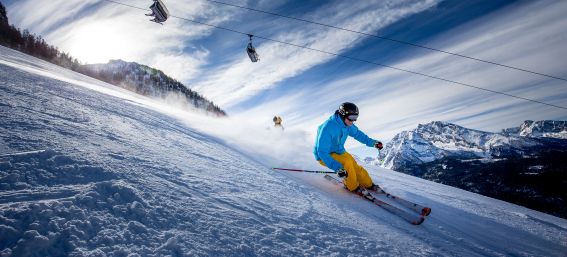
Let's make our ski holidays sustainable together through conscious decision-making.
We care!

Explorer Hotels Sustainability Program
Would you like to know more about sustainable mobility on vacation?
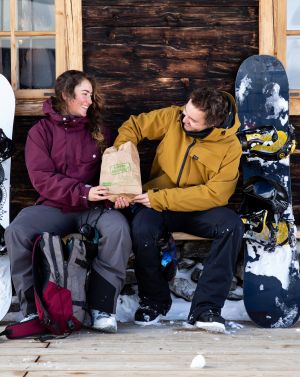
#GreenMoments - Your input
Therefore no restaurant
Green journey of discovery
Importance of water in the Alps
Earth Day

Earth Hour
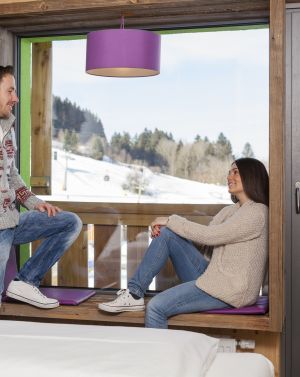
Proper ventilation in passive houses and at home
Sustainable sportswear
Good reasons for New Year's Eve without fireworks

CleanUp Days
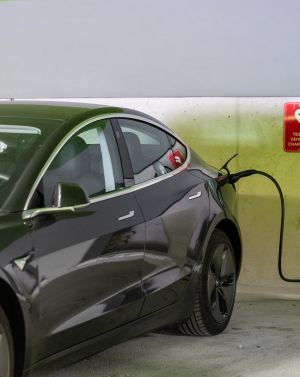
electric car
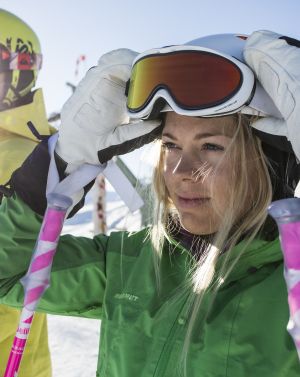
Sustainability in winter sports
Regional sustainability
Upcycling in mountain sports
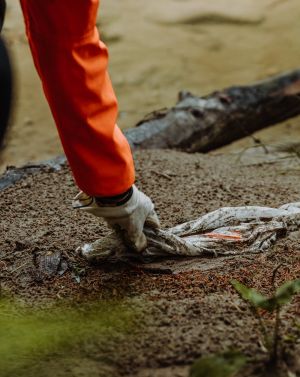
What is plogging?
Zero Waste in the Explorer Hotels
Website